When I Die Will I See My Loved Ones Again
one. The 72-60 minutes mark is when it begins.
Subsequently losing my sis and father within 9 weeks, I spent v years investigating what happens when nosotros die. While interviewing dozens of people who work with terminally sick patients, or have had deathbed experiences or have come up back from decease, I learned that the dying often seem to know that they're going, and when. Within 72 hours of death, they begin to speak in metaphors of journey. They request their shoes, or their plane tickets or demand to become home when they are home. When my sister lay dying of chest cancer, she said, as if frustrated, "I don't know how to leave," and spoke of "hapless flight attendants."
"Does my wife understand about the passport and ticket?," asked a human succumbing to the ravages of pancreatic cancer of a Virginia-based hospice nurse named Maggie Callanan (Callanan, forth with boyfriend nurse Patrica Kelley, would go on to money the official phrase, "nearing expiry awareness," and co-writer Final Gifts: Agreement the Special Awareness, Needs, and Communications of the Dying). After having helped hundreds of patients transition to expiry, Callanan believes this vision of a journey ahead is no accident. The dying are not picturing an end. They are seeing death equally a trip—possibly to somewhere else.
2. Dead family members and friends can come up dorsum to us.
This sounds like a side effect of the powerful pain killers they are taking. But is it? In 1 major cantankerous-national study (by psychologists Karlis Osis, PhD, and Erlendur Haraldsson, PhD, of the University of Iceland) comparing deathbed experiences in the U.S. and India, the majority of patients who were however conscious within an hour of death saw deceased loved ones beckoning, regardless of whether they were medicated. When I interviewed Audrey Scott, 84, who was dying of cancer, she was receiving visits from her adopted son Frankie, she said, who had predeceased her past several years. He sabbatum quietly in a nearby armchair.
In some cases, people run across friends or family members they merely weren't aware had died. In one of the outset well-investigated cases of a deathbed vision, a mother dying in childbirth told obstetrician Lady Florence Barrett in a Dublin infirmary that she saw her deceased father before her. She also saw something that confused her: "He has Vida with him," she told Lady Barrett, referring to her sister, whose expiry three weeks before had been kept from her. "Vida is with him," she repeated wonderingly.
3. At that place's something else well-nigh that famous white light.
It has become a bit of a cliche in our culture to talk most seeing "the white low-cal." But, the truth is that this light is besides perceived as wisdom and love. Information technology's a feeling as much as a visual experience. Those who take near-death experiences—retaining consciousness during cardiac arrest, for example—are veritably shattered past the emotional power of this low-cal. Dr. Yvonne Kason, who had been in a plane crash, compared it to an extraordinary maternal beloved. "Like I was a newborn baby on my mother'south shoulder. Utterly safety." So she added: "It was like I'd been lost for centuries and I'd establish my way home." Nurse Callanan frequently observes her patients existence nowadays, conscious, in this globe and also showtime to see and remark upon the beauty of another.
4. Fifty-fifty when there's no warning, they may still say bye.
It came every bit a true surprise for me to learn that written report after report confirms that roughly l percent of the bereaved sense the presence of lost loved ones, either in the moment of death, or sometime after. Information technology happened within my own family. My begetter died abruptly, without a warning affliction, in the middle of the dark in 2008. My sister Katharine, awake in her bedroom 100 miles away, suddenly sensed a presence near her, and felt hands gently cupping the back of her head. She was suffused with feelings of contentment and joy, an feel so brilliant and strange that she establish it remarkable—and shared it with her son earlier learning that our father had died.
Although psychiatrists call these instances "grief hallucinations," the science of such subjective experiences remains poorly understood; certainly, it doesn't explicate how nosotros tin can have them before nosotros know someone has died. I man told me well-nigh going downstairs to breakfast during his babyhood, and seeing his father seated at the table, equally always. He was totally mystified when his mother proceeded with the news that his begetter had died in the night. "But he's sitting correct there!," he said. His father and then faded.
Simply 5 per centum of these experiences are visual, co-ordinate to a report done by palliative-care doctor Michael Barbato at St. Joseph'south Hospital in Auburn, Australia. The majority involve the sense of a presence—not a fleeting, shadowy sense, but a bright and specific one, often spurring people to brand urgent telephone calls, or to modify direction as they're driving, or to flare-up into tears. It tin happen at the moment of expiry, later on some weeks, or even years subsequently. Said the Toronto advertising executive Karen Simons, of a cold night half-dozen weeks after her father died: "I'm driving on the highway, and into the passenger seat comes Dad. I could feel him settle in. He had a very distinctive lean to the left. He rode with me from Kennedy Rd. to Pickering (x miles). It was incredibly real, and it was completely transforming."
5. The living can share in the experience of dying.
Research in 2010 by psychiatrist Raymond Moody, PhD, who coined the term, "most-death experience" in his groundbreaking 1975 book Life Later on Life, suggests people can occasionally co-experience the sense of entering the lite. As Florida-based palliative-intendance psychologist Kathleen Dowling Singh, PhD, has noted, "The dying become radiant and speak of 'walking through a room lit by a lantern,' or of their 'trunk filling with sunlight.'" Sometimes, if only for a moment, their family members do, too. The psychologist Joan Borysenko, PhD, for instance, described having such an feel when her 81-year-former mother died at Beth State of israel Deaconess Medical Center in Boston while Borysenko was on faculty at Harvard. The room seemed to fill with a brilliant light, which both she and her teenage son saw, as they watched her mother rising spectrally out of her body.
We fearfulness death in our culture, and find information technology difficult to talk most and witness. But perhaps the dying sympathise more than we practise, and tin offer us comfort, if only we could listen to what they're attempting to say.
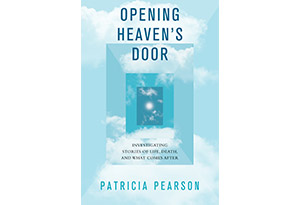
Patricia Pearson is the author of Opening Heaven'due south Door: Investigating Stories of Life, Death, and What Comes Later on and When She Was Bad...: Vehement Women and the Myth of Innocence.
Source: https://www.oprah.com/spirit/truths-about-death-patricia-pearson
0 Response to "When I Die Will I See My Loved Ones Again"
Post a Comment